Founded in 1905 Japanese Swords and Fittings GINZA SEIKODO
PRODUCT
Funada Ikkin kao
- NBTHK 28th Juyo Tosogu Certificate
-
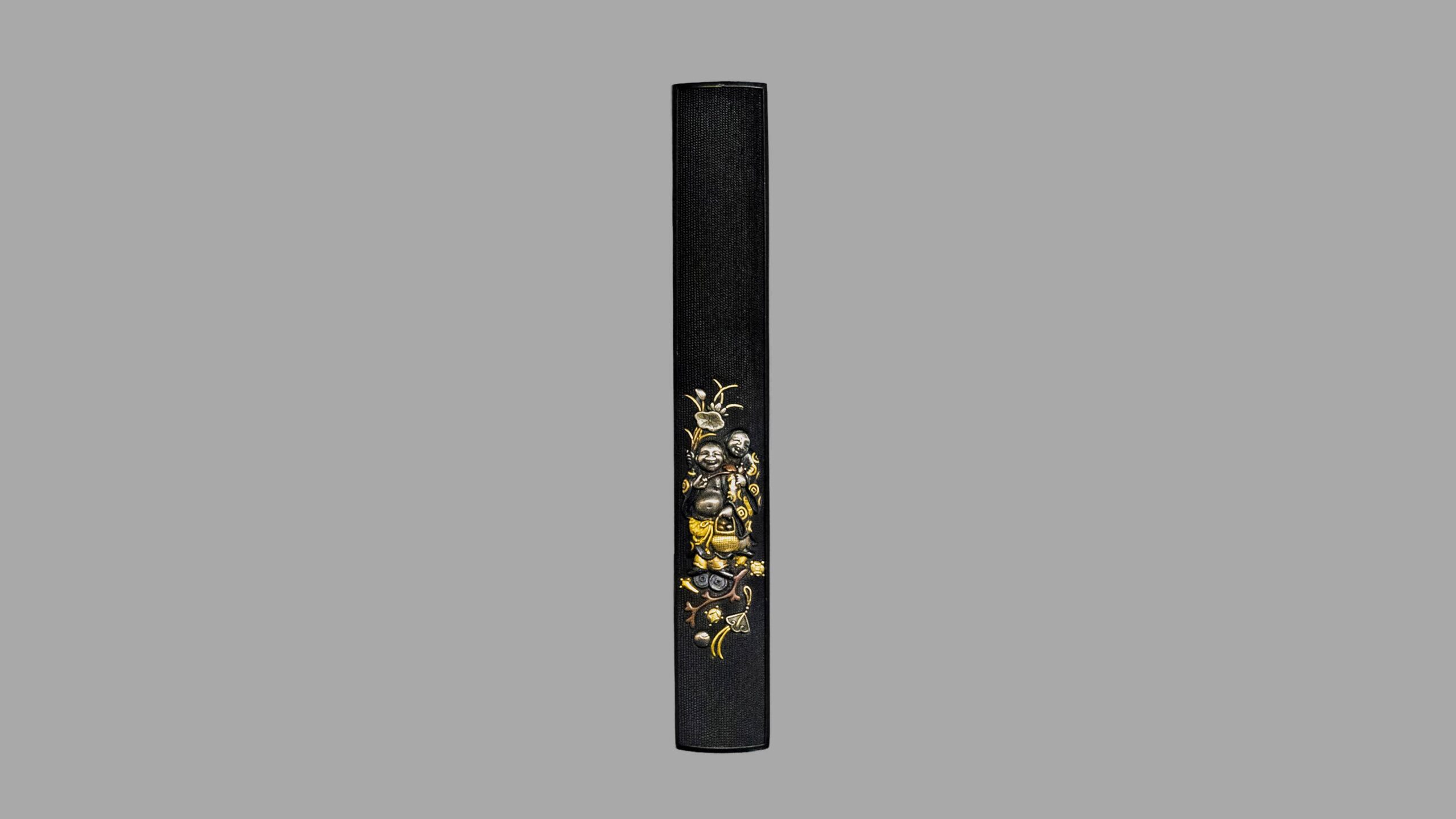
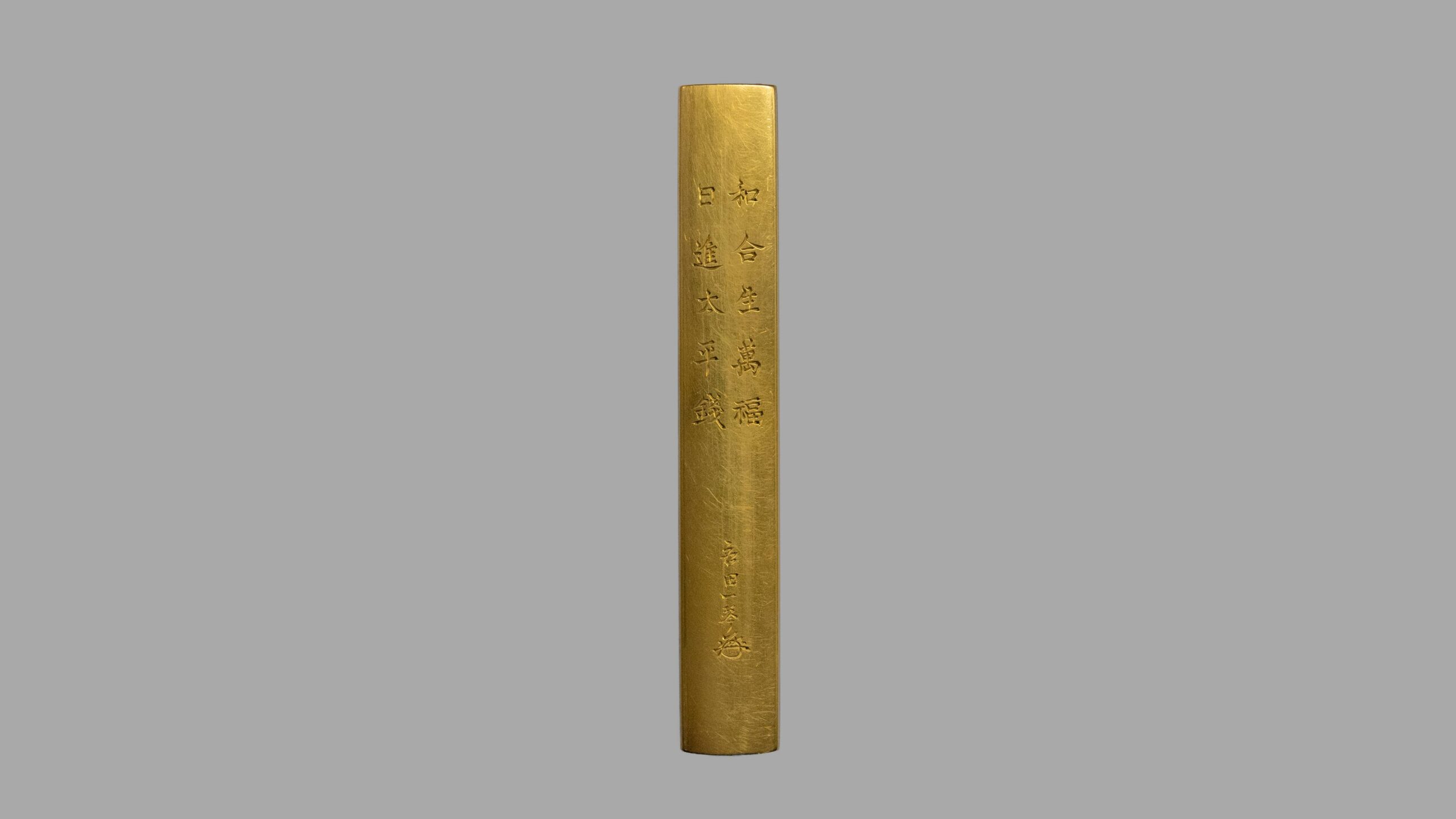
Funada Ikkin kao
Good of Harmony and Union
Details
- Length
9.7cm
- Width
1.5cm
-
Funada Ikkin kao
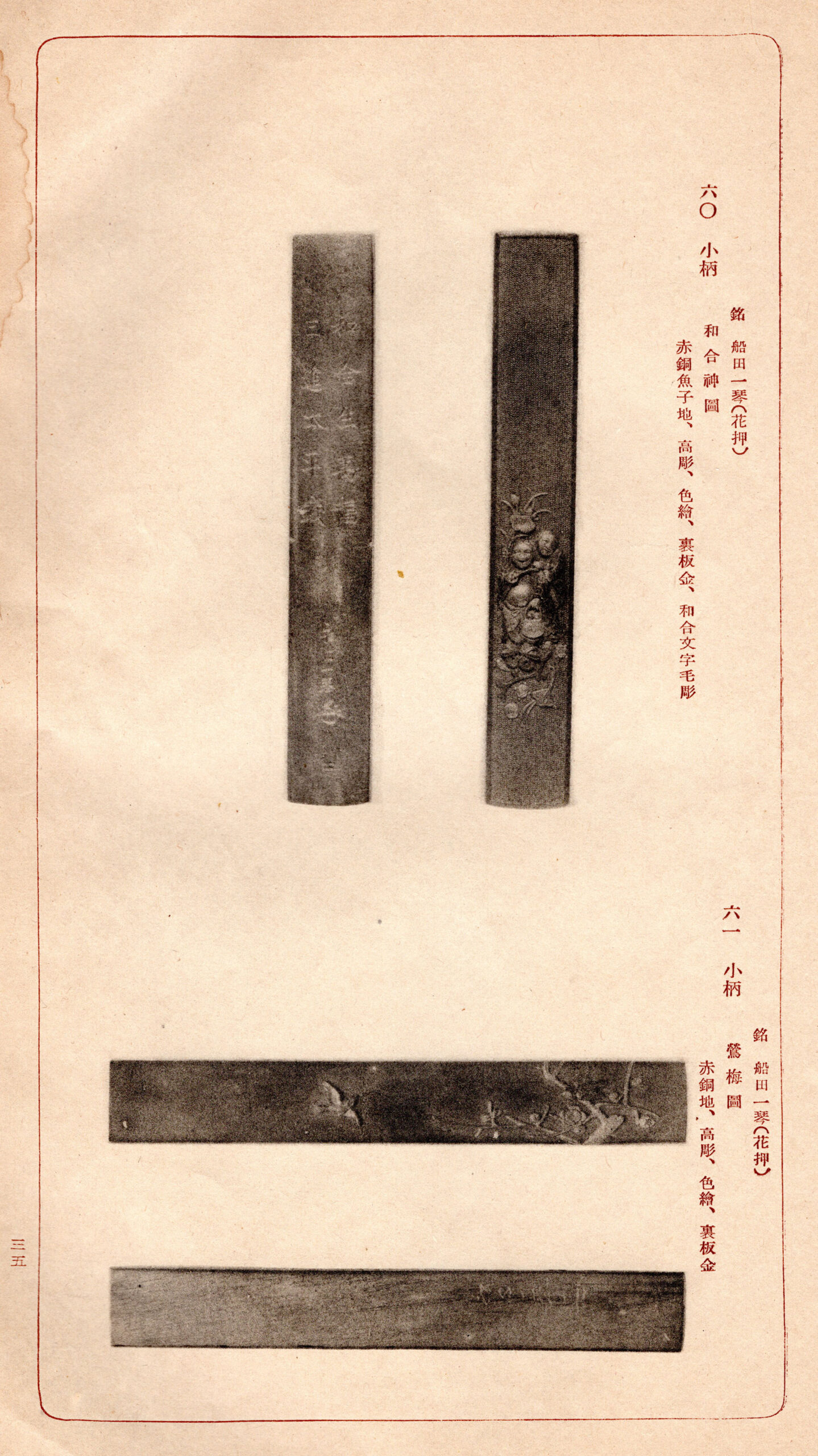
Good of Harmony and Union
*Please enquire for details -
NBTHK 28th Juyo Tosogu Certificate
Published Referrences
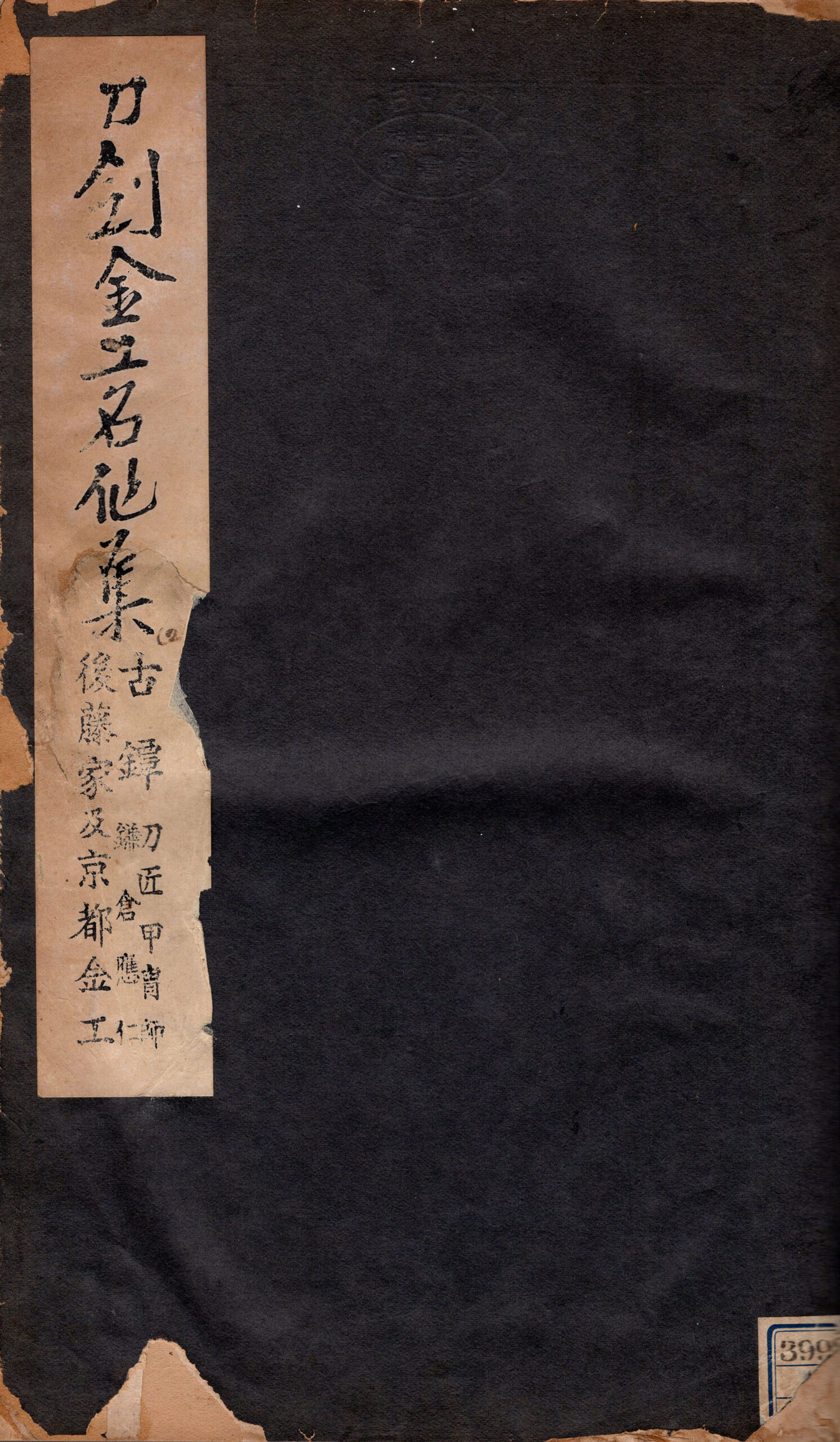
・Masterpieces of Japanese sword metalwork great metalworkers
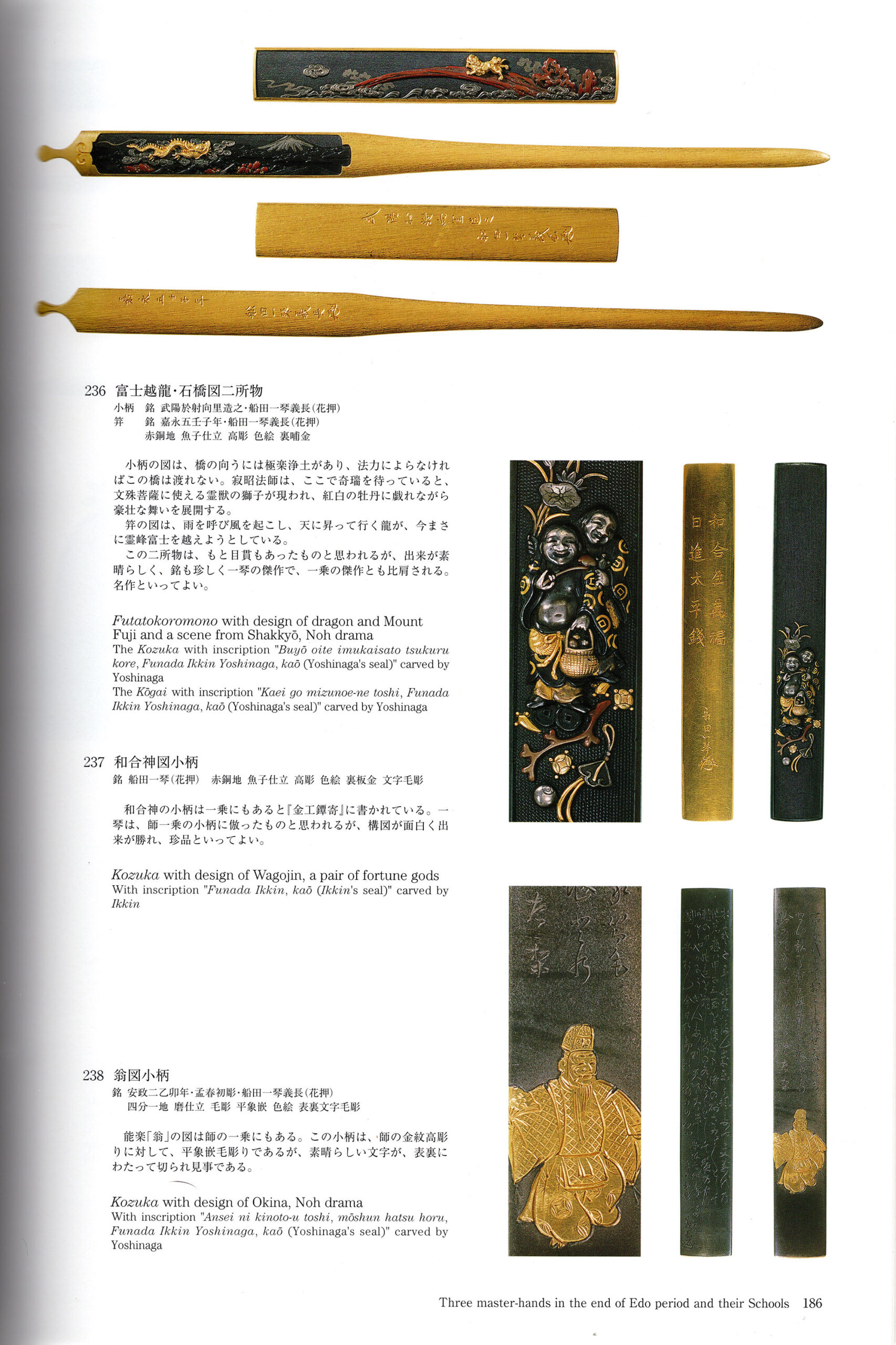
・Masterpieces of Machibori sword fittings
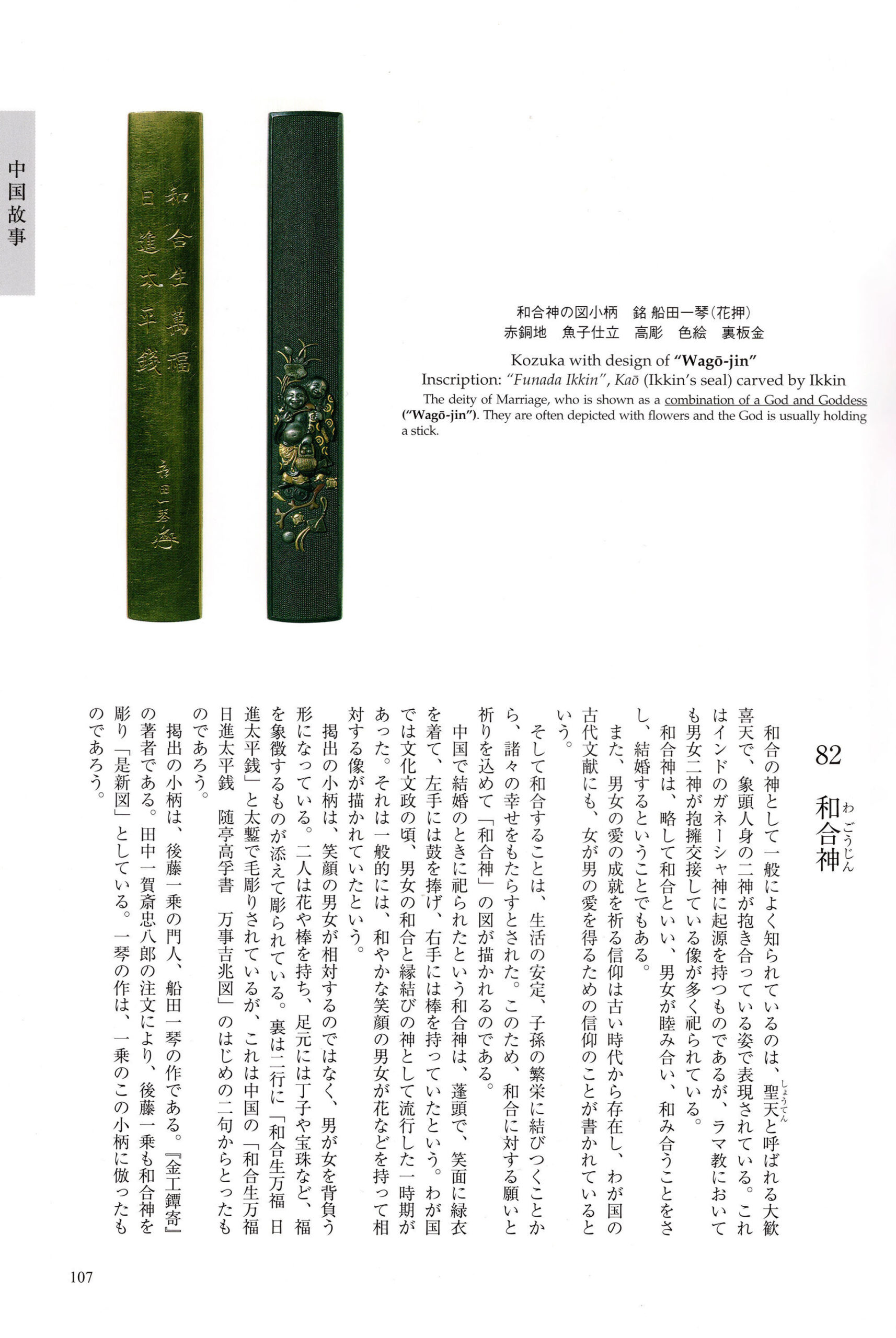
・The art appreciation of Japanese sword fittings
Funada Ikkin was born in Shonai, Dewa Province. He was the son of Funada Hirotsune, a disciple of Iwamoto Hirotoshi, and later became one of the foremost pupils of the celebrated master Goto Ichijo. At the age of 15, in Bunsei 9(1826), he traveled to Edo to study under Kumagai Yoshiyuki. Two years later, in Bunsei 11(1828), he entered the school of Goto Ichijo and underwent seven years of training in Kyoto. After returning to Edo, he established his own studio and was subsequently appointed as an official metalworker to the Sakai family, lords of the Shonai Domain. He passed away in Bunkyu 3(1863) at the age of 52.
Ikkin excelled in both high-relief carving (Takabori) and Katakiribori engraving. He was especially renowned for his exceptional mastery of Kosukibori, a highly demanding carving technique in which he was considered unsurpassed by his contemporaries. Even his teacher, Goto Ichijo, openly acknowledged the extraordinary quality of his workmanship.
This work depicts the God of Harmony and Union (Wago-shin), divine figures believed to bestow domestic harmony, marital happiness, and prosperity for future generations. Traditionally, the image of these deities has been revered as an auspicious symbol of prayers and heartfelt wishes. In China, they are said to be enshrined at wedding ceremonies as an expression of the hope for harmony and unity between two families. A closely related composition by Goto Ichijo is also known, suggesting that this work was created after his master's design.Executed with meticulous care, this outstanding example fully demonstrates the supreme artistic accomplishment of Funada Ikkin, regarded as the most gifted disciple of the Ichijo school.
-
-
- ZOOM
-
-
-
- ZOOM
-
-
-

- ZOOM
-
-
-
- ZOOM
-
-
-
- ZOOM
-
-
-
- ZOOM
-
-
-
- ZOOM
-
-
-
- ZOOM
-
-
-
- ZOOM
-